
In this article, I dive deep into one of the hottest trends in AI: AI agents. This technology is set to drive massive progress in the AI world, possibly even more than the next generation of foundation models. Let’s break it down and explore why AI agents are causing such a stir.
Andrew NG, recently wrote a series of blogs on Agentic Patterns that underscores the significance of this trend:
“Dear friends, I think AI agent workflows will drive massive AI progress this year — perhaps even more than the next generation of foundation models. This is an important trend, and I urge everyone who works in AI to pay attention to it.” — Andrew NG
At their core, AI agents are entities powered by large language models (LLMs) and designed to perform tasks autonomously. Agents can plan, reason, and take action to achieve specific goals. They’re like digital assistants on steroids, capable of breaking down complex tasks into manageable steps, using various tools to accomplish those steps, and learning from their experiences along the way.
The excitement surrounding AI agents stems from their potential to revolutionize how we interact with AI systems and automate complex processes. Imagine having a virtual team member that can not only understand your requests but also devise strategies to fulfill them, adapt to new situations, and even collaborate with other AI agents to tackle multi-faceted problems.
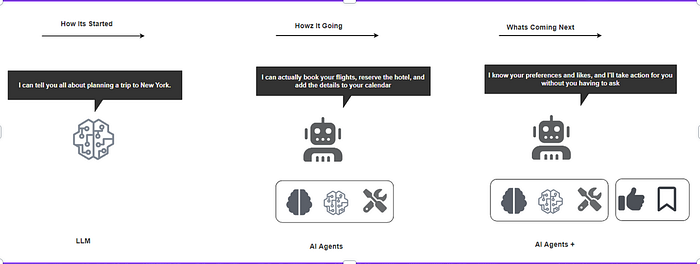
We’ve moved from basic language models that could only inform — “I can tell you about planning a trip to New York” — to today’s AI agents that can act: “I can book your flights, reserve the hotel, and add details to your calendar.” The future promises even more: AI that knows your preferences and takes proactive action without prompting. This progression from information to action to anticipation represents a fundamental shift in how AI will integrate into our lives, transforming from a passive tool to an active, personalized assistant.
From automating business processes and enhancing customer service to accelerating scientific research and powering creative endeavors, the applications of AI agents are vast and varied. They have the potential to boost productivity, drive innovation, and unlock new possibilities across industries.
This article aims to provide valuable insights for developers seeking to harness AI agent technology, business leaders exploring its potential applications, and individuals interested in understanding the future of artificial intelligence.
This comprehensive guide to AI agents will cover the following topics
- The Anatomy of an AI Agent: An examination of the key components that constitute an AI agent, from its LLM core to its planning and action capabilities.
- Building Your First AI Agent: A step-by-step tutorial on creating a basic AI agent using Langgraph, focusing on fundamental search functionality.
- Advanced Agent Techniques: An exploration of agentic patterns and multi-agent systems that elevate AI capabilities.
- Building Multi-Agent System : A step-by-step tutorial on creating a stateful multi-agent AI system using Langgraph
- How does Multi-Agent System boost performance: Diving deeper into the agents that Andrew NG and his team build to improve coding eval performance
- Challenges and Future Directions: A discussion of the obstacles facing AI agent development and potential future developments in this field.
The Anatomy of an AI Agent
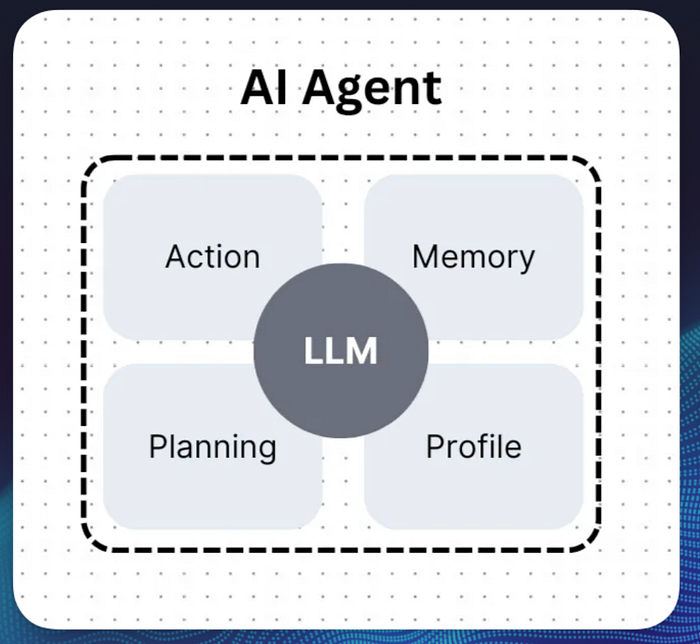
AI agents are complex systems composed of several key components that work together to enable autonomous task completion. The anatomy of an AI agent typically consists of five main elements: